
How TVs, Rugs, and Even Shades Affect Aesthetics and Function in Smart Home System Design
March 19, 2026
Read time: 6 minutes
Key Takeaways
- Smart home system design is not just about technology, but also about how the room is arranged.
- TV placement affects viewing comfort, lighting balance, and overall room layout.
- Rugs can improve both room aesthetics and sound performance in media spaces.
- Automated shades help control lighting and improve screen visibility.
- A well-designed smart home system blends technology with comfort and style.
Modern Smart Home System Design and Strand Security
When people think about smart homes, they often focus on technology like cameras, speakers, and control systems. But the most successful smart homes are not just about the devices themselves. They are about how technology works together with the design of the room.
TV placement, rugs, window treatments, and furniture layout can all affect how well a smart home system performs. These elements influence lighting, sound quality, and the overall experience of using your technology.
In modern smart home system design, aesthetics and functionality go hand in hand. When done well, technology blends into the home naturally while improving comfort and usability.
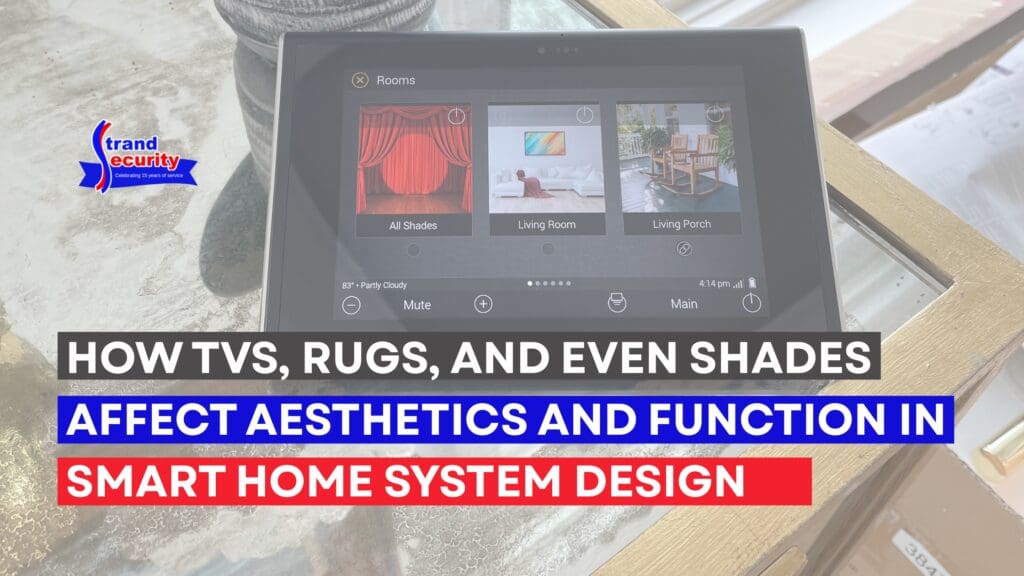
Why Smart Home System Design Goes Beyond Technology
Many homeowners assume that installing smart devices alone will create the perfect system. In reality, the layout of the room plays a huge role in how technology performs.
A poorly positioned TV may cause glare from windows. Hard floors without rugs can make audio systems sound harsh or echoing. Window treatments that don’t control light properly can make screens difficult to see during the day.
By considering the design elements of a room early in the process, a smart home system can feel seamless rather than forced.
TV Placement and the Overall Viewing Experience
The television is usually the centerpiece of a home entertainment setup, but its placement can dramatically affect both aesthetics and functionality.
Mounting height is one of the most common issues. If a screen is mounted too high, viewers may experience neck strain during long movie nights or sporting events. Placement relative to seating also affects comfort and image clarity.
Lighting is another major factor. Windows and bright ligHow TVs, Rugs, and Even Shades Affect Aesthetics and Function in Smart Home System Designhts behind viewers can cause glare on the screen, making it harder to see details. Smart home system design often includes adjusting lighting zones and window coverings to create the best viewing conditions.
A properly placed TV not only improves the viewing experience but also helps maintain a clean, uncluttered room design.
Rugs and Their Hidden Role in Sound Quality
Rugs are often chosen for style and comfort, but they also play an important role in how sound travels through a room.
Rooms with hard surfaces like tile, hardwood, or concrete tend to reflect sound waves. This can create echoes and reduce clarity when listening to music or watching movies.
Adding a rug helps absorb sound and reduce those reflections. In home theater setups or rooms with high-quality speakers, this can noticeably improve the listening experience.
Rugs also contribute to the visual warmth of a room. They help anchor furniture and create a comfortable space where technology does not feel overwhelming.
Automated Shades Improve Lighting and Comfort
Natural light is one of the most beautiful features of a home, but it can also interfere with screens and displays.
Automated shades solve this challenge by allowing homeowners to adjust light levels instantly. During the day, shades can lower slightly to reduce glare while still allowing natural light to enter the room. At night, they can close automatically for privacy and improved viewing conditions.
In smart home system design, automated shades can also be programmed to respond to specific events. For example, shades can close automatically when a movie begins or when the sun reaches a certain angle.
This type of automation improves comfort without requiring constant manual adjustments.
Creating Balance Between Technology and Style
The goal of a smart home is not to fill rooms with visible devices. Instead, technology should blend naturally with the environment.
In-wall speakers, hidden wiring, and thoughtfully placed equipment help maintain the visual appeal of a room. At the same time, design elements like rugs, shades, and furniture placement support the performance of the technology.
When aesthetics and function are balanced correctly, the result is a home that feels both modern and comfortable.
Why Professional Planning Makes a Difference
Designing a smart home system involves more than choosing devices. It requires understanding how rooms are used, where light enters the space, and how sound travels.
Professional planning helps avoid common mistakes such as poor TV placement, ineffective speaker positioning, or lighting that interferes with screens.
By evaluating the entire space, installers can design systems that perform well while preserving the beauty of the home.
Smart Homes Should Feel Natural
Technology should enhance everyday living rather than dominate it. The most successful smart homes are the ones where devices fade into the background and the experience simply feels better.
Thoughtful smart home system design allows TVs, lighting, shades, audio systems, and décor to work together instead of competing with one another.
When aesthetics and functionality align, the result is a home that looks great, sounds great, and works exactly the way it should.
Frequently Asked Questions
Why do rugs matter in smart home entertainment rooms?
Rugs help absorb sound reflections, which improves audio clarity and reduces echo in rooms with hard floors.
Can automated shades improve TV viewing?
Yes. Automated shades reduce glare from sunlight and help maintain consistent lighting conditions for watching television or presentations.
Is TV placement really that important in smart home design?
Proper TV placement improves viewing comfort, reduces glare, and keeps the room visually balanced.
Do smart home systems require major renovations?
Not always. Many smart home upgrades can be installed with minimal changes to the existing structure of the home.
Should smart home systems be planned during home design or renovation?
Planning during design or renovation allows technology, lighting, and room layout to work together more effectively, but systems can also be added to existing homes.