
Where Should You Put Security Cameras? A Room-by-Room Guide for Better Protection
Date
August, 2026
Read time
9 minutes
Key Takeaways
- Strategic camera placement is just as important as the camera itself.
- Focus on entry points, driveways, garages, and outdoor living spaces first.
- Indoor cameras should protect common areas while respecting privacy.
- Avoid common placement mistakes like pointing cameras directly into sunlight or at your neighbor’s property.
- Professional installation helps eliminate blind spots and ensures complete coverage.
Where Should You Put Security Cameras?
Installing security cameras is one of the smartest ways to protect your home—but buying great cameras is only half the equation.
Where you place those cameras can determine whether they provide useful evidence or miss the most important moments entirely.
A camera pointed in the wrong direction may leave critical blind spots. A poorly positioned outdoor camera might struggle with glare from the afternoon sun. Even expensive cameras can’t do their job if they’re installed in the wrong location.
Whether you’re building a brand-new security system or upgrading an existing one, this room-by-room guide will help you understand the best places to install security cameras, and the common mistakes to avoid.
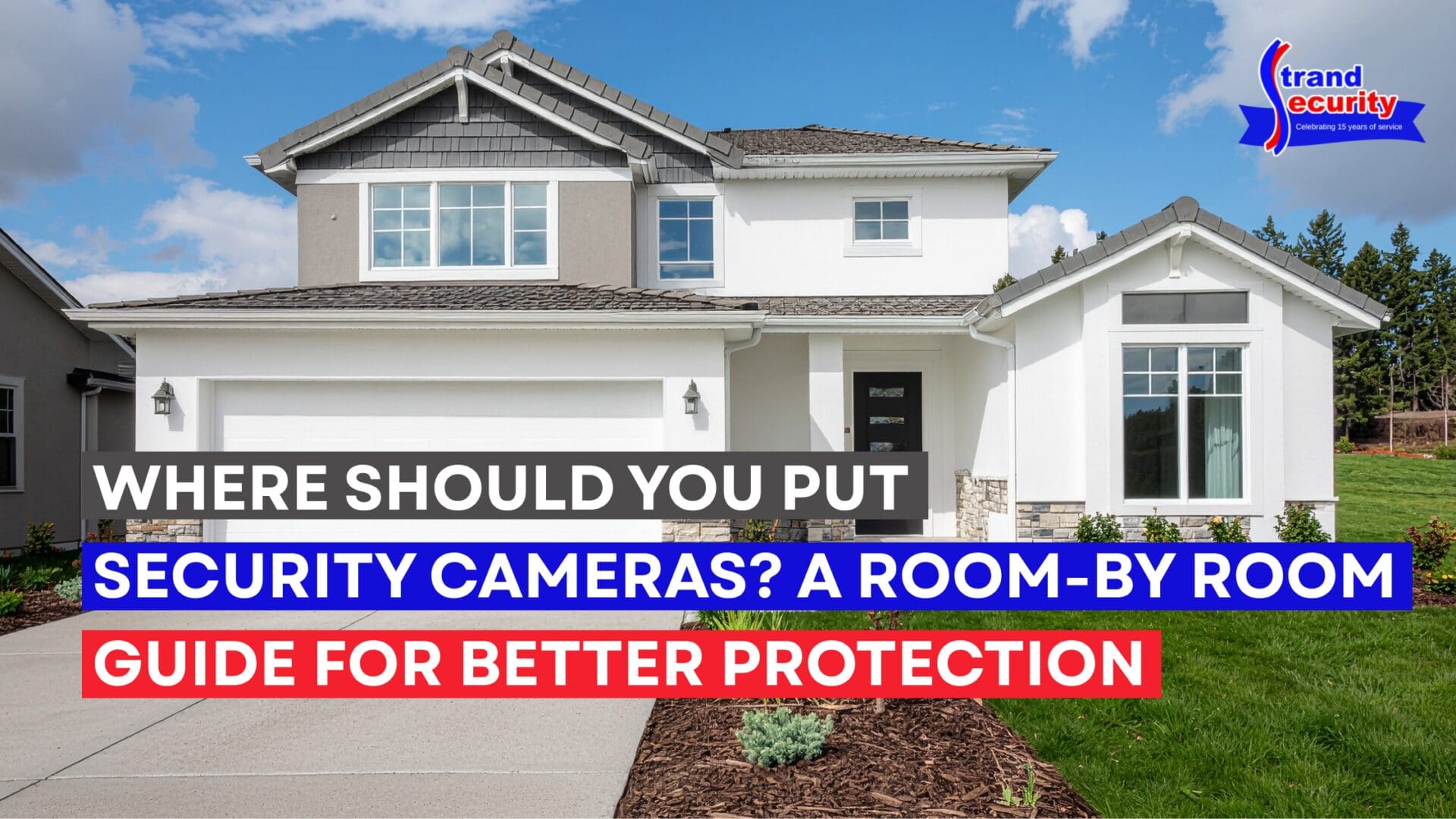
Why Security Camera Placement Matters
Many homeowners assume that adding more cameras automatically means better security.
Not necessarily.
A thoughtfully designed system with six strategically placed cameras often provides better protection than twelve cameras installed without a plan.
Good placement helps you:
- Eliminate blind spots
- Capture clear facial images
- Monitor common entry points
- Improve nighttime visibility
- Reduce false alerts
- Maximize every camera’s field of view
The goal isn’t to watch everything, it’s to watch the areas that matter most.
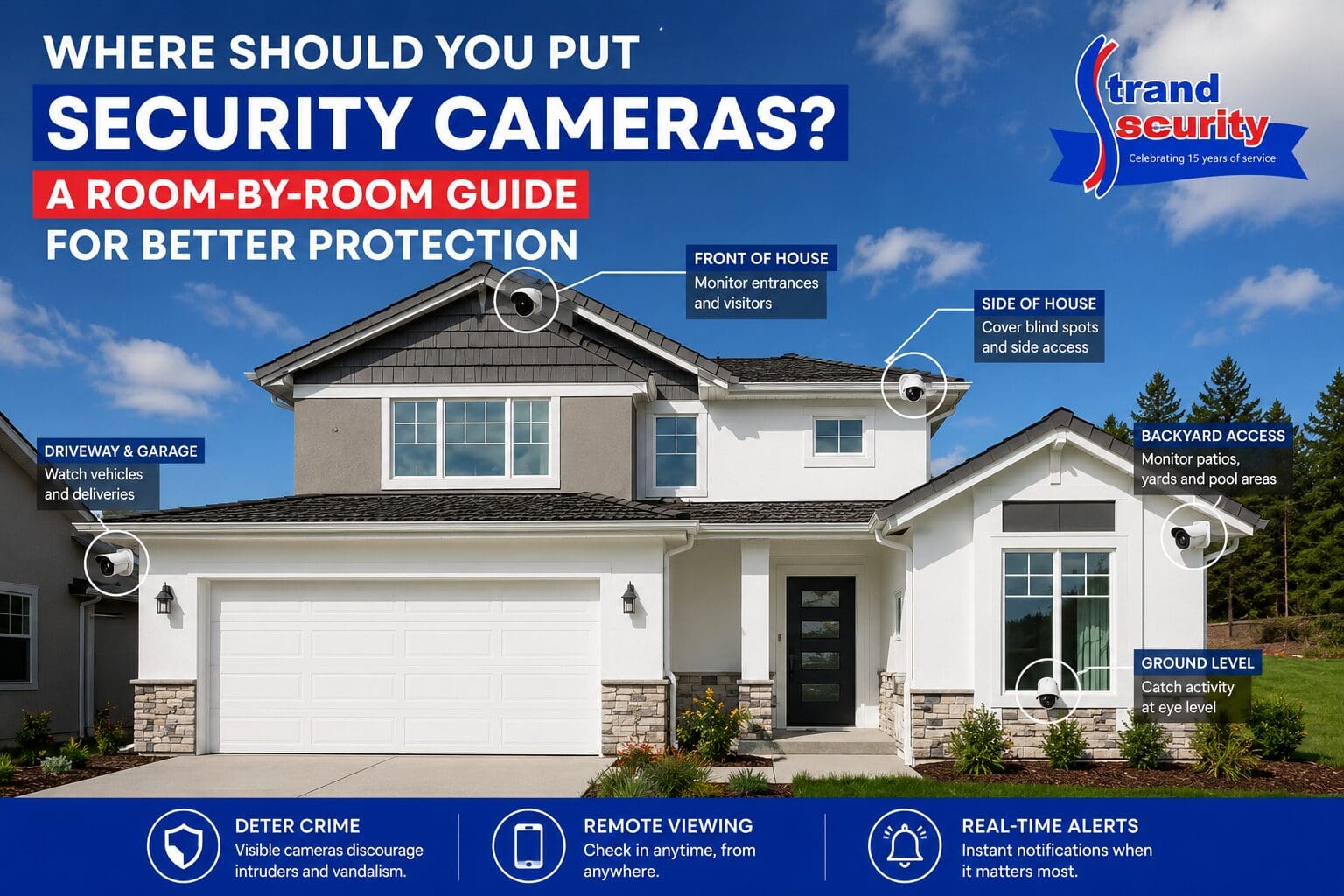
Start at the Front Door
If you only install one camera, make it your front door.
Studies consistently show that the majority of visitors, welcome or no, approach through the front entrance.
A front-door camera helps you:
- Monitor package deliveries
- See visitors before opening the door
- Talk with delivery drivers remotely
- Record unexpected activity
- Deter porch pirates
A video doorbell is an excellent option, but pairing it with a wider-angle camera gives you even more visibility around the entryway.
Protect the Driveway and Garage
Your driveway is one of the busiest areas around your home.
It sees family members coming and going, guests arriving, deliveries, and vehicle traffic every day.
A camera covering the driveway can help you:
- Monitor parked vehicles
- Record suspicious activity
- Verify deliveries
- Watch teenage drivers come and go
- Capture license plates when possible
If your garage has an exterior entrance, it should also be covered by a camera whenever possible.
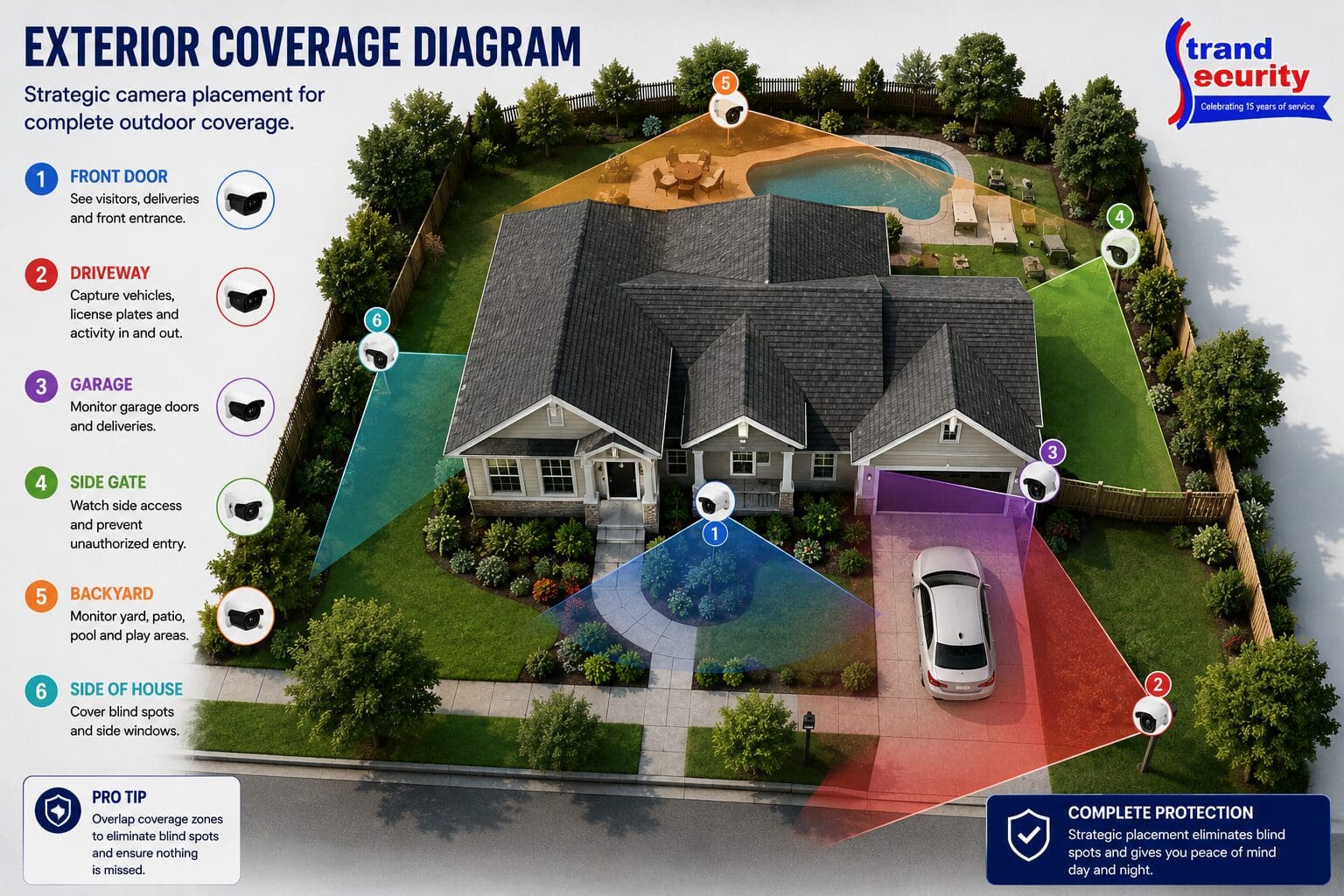
Don’t Forget to Install Security Cameras in the Backyard
Backyards are often overlooked—but they’re one of the most common access points for intruders.
Sliding glass doors, fences, pools, patios, and detached sheds all deserve attention.
A backyard camera can help you:
- Monitor outdoor entertaining areas
- Watch over children and pets
- Protect grills and outdoor furniture
- Keep an eye on pools
- Detect movement behind your home
For homeowners who enjoy spending time outside, backyard surveillance also provides peace of mind without disrupting daily life.
Cover First-Floor Windows and Side Entrances Need Security Cameras, too
Not every home has the same layout, but most share one thing in common: first-floor windows and side entrances are attractive access points.
These locations are often less visible from the street, making them appealing to someone trying to avoid attention.
Walk around your home and ask yourself:
- Which doors aren’t visible from the front?
- Are there gates leading into the backyard?
- Are there basement entrances?
- Which windows could someone realistically access?
Those answers will help determine where additional cameras may be beneficial.
Where to Place Indoor Security Cameras
Indoor cameras serve a different purpose than outdoor cameras.
Rather than monitoring every room, focus on spaces where activity naturally flows.
Good locations include:
- Entry hallways
- Main living areas
- Staircases
- Mudrooms
- Areas leading to exterior doors
These locations allow you to capture movement through the home without unnecessarily invading personal privacy.
Many homeowners also appreciate indoor cameras for checking on children, pets, or elderly family members during the day.
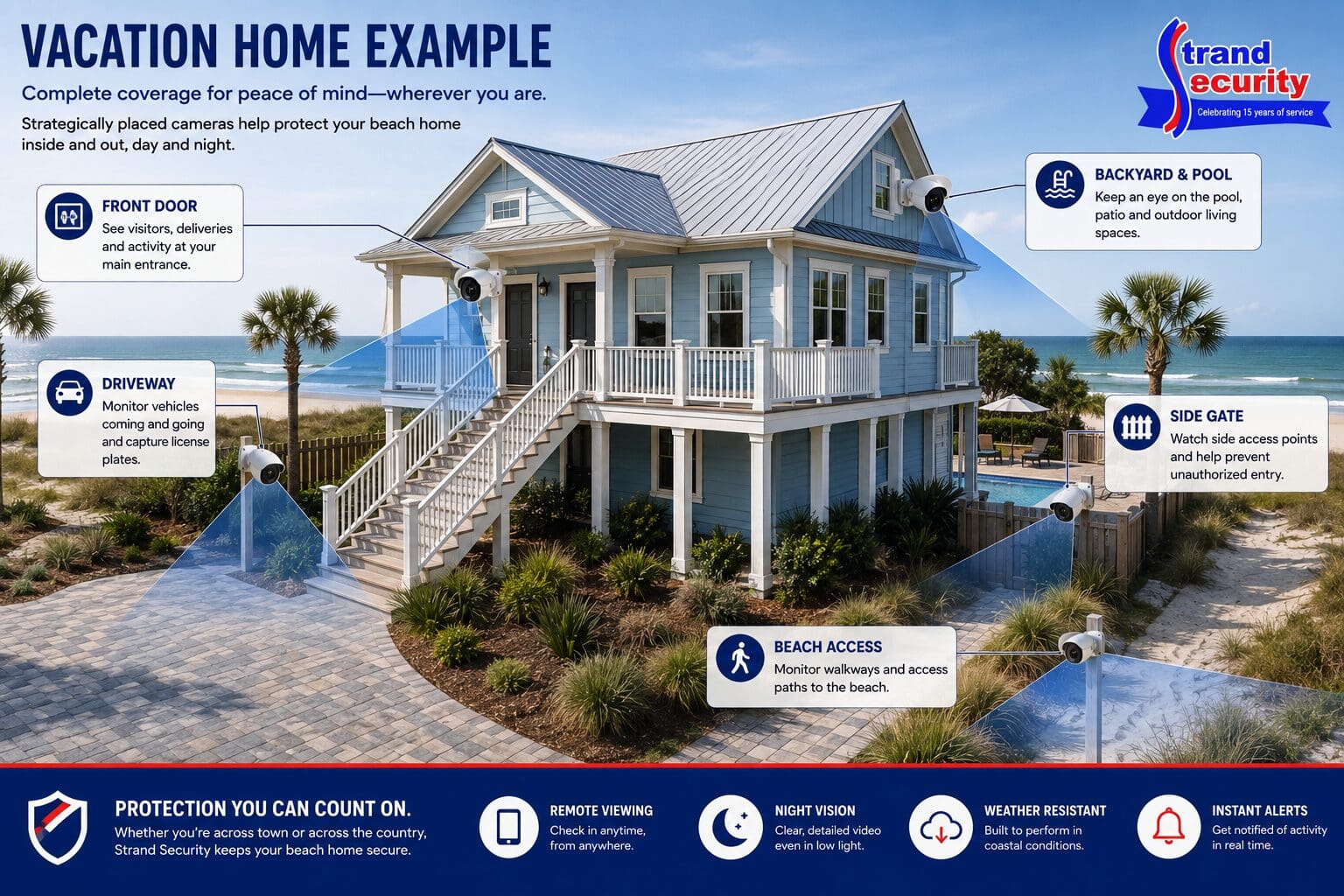
Vacation Homes Need a Different Security Camera Strategy
Along the Grand Strand, many homeowners own second homes, vacation properties, or short-term rentals.
These homes often sit empty for days or weeks at a time, making comprehensive surveillance even more important.
A vacation home camera system should prioritize:
- Every exterior entrance
- Driveway access
- Garage doors
- Outdoor gathering areas
- Pool entrances
- Backyards
Remote viewing is especially valuable for second-home owners, allowing them to check on the property anytime from anywhere.
Where NOT to Put Security Cameras
Good placement is important—but avoiding poor placement is just as critical.
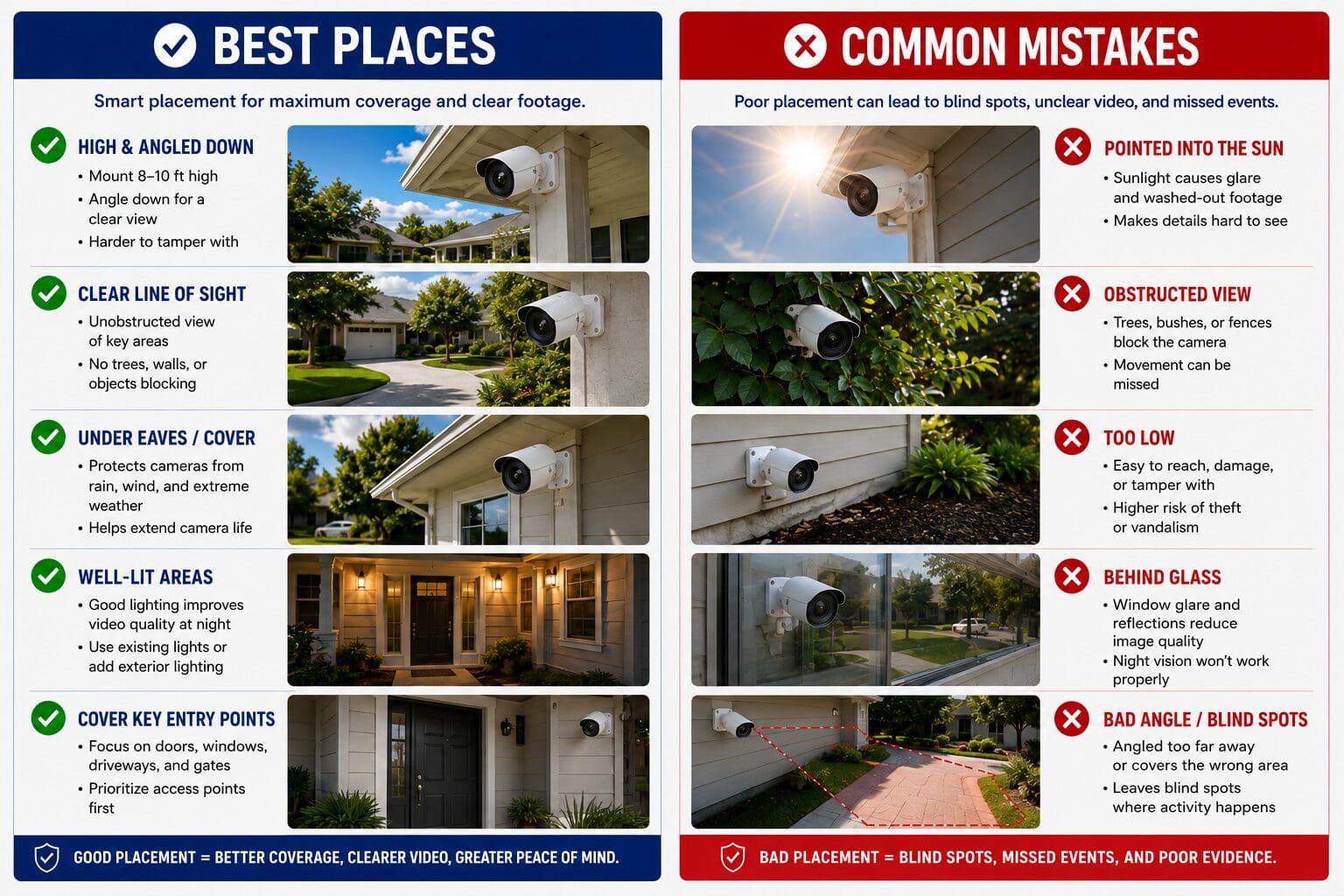
Avoid installing cameras:
In bedrooms
Bedrooms should remain private spaces unless there’s a very specific need.
Inside bathrooms
This should never be done for obvious privacy reasons.
Pointed directly at your neighbor’s property
Your cameras should monitor your property—not someone else’s.
Facing directly into the sun
Strong backlighting can wash out images and reduce recording quality during parts of the day.
Too low to the ground
Low-mounted cameras are easier to tamper with or damage.
Behind bushes, trees, or decorations
Landscaping changes throughout the year. Make sure branches, shrubs, and seasonal decorations don’t block your view.
Hidden behind glass
Indoor cameras pointed through windows often suffer from glare and poor nighttime performance due to reflections.
Common Security Camera Placement Mistakes
Even well-intentioned homeowners make mistakes when installing cameras.
Some of the most common include:
- Installing too many cameras in one area and none in another.
- Mounting cameras too high, making faces difficult to identify.
- Ignoring nighttime lighting conditions.
- Forgetting about Wi-Fi signal strength.
- Failing to clean lenses regularly.
- Overlooking seasonal changes in landscaping.
- Assuming DIY placement provides complete coverage.
A professional site assessment can often identify blind spots homeowners don’t realize exist.
Frequently Asked Questions
Where should I put security cameras first?
Start with your front door, driveway, and main exterior entrances. These are the highest-priority areas for most homes.
How many security cameras does the average home need?
Most homes benefit from four to eight strategically placed cameras, though the ideal number depends on your property’s size and layout.
Should security cameras record all the time?
Many homeowners choose continuous recording, while others prefer motion-activated recording. The right choice depends on your needs and storage capacity.
Is it okay to install cameras inside my home?
Yes, but focus on common areas such as entryways, living rooms, and hallways while respecting personal privacy.
Can security cameras see at night?
Most modern security cameras include infrared or enhanced night vision, allowing them to record clear footage even in low-light conditions.
Why should I hire a professional instead of installing cameras myself?
Professional installers understand camera angles, lighting, Wi-Fi coverage, blind spots, and long-term system design, helping ensure your cameras provide the protection you expect.
Professional Camera Placement Makes the Difference
Choosing quality cameras is important—but knowing where to install them is what creates an effective security system.
At Strand Security, we evaluate your home’s layout, entry points, lighting conditions, landscaping, and daily routines before recommending camera locations. The goal isn’t simply to install cameras—it’s to create a system that provides complete, reliable coverage without unnecessary equipment.
Whether you live in Myrtle Beach, Horry County, Georgetown County, or anywhere along the Grand Strand, our team can design a professionally installed camera system that protects your home today and adapts to your needs tomorrow.