
How to Build the Perfect Home Theater System for Football Season
Date: September 1, 2026
Read Time: 9 minutes
Key Takeaways
- A great home theater system is about more than buying the biggest TV you can find.
- TV placement, audio, lighting, seating, and room acoustics all affect the game-day experience.
- Smart shades and lighting can help reduce glare and create the right atmosphere for daytime and evening games.
- An outdoor TV and connected audio system can extend your football watch party to the patio, backyard, or outdoor kitchen.
- Smart home automation can connect indoor and outdoor entertainment so you can control your entire game-day setup with one system.
What Makes a Great Home Theater System for Football?
Football season has a way of bringing people together.
Saturdays are spent tailgating. (IYKYK)
Some Sundays are spent quietly watching your favorite team from the couch. Others turn into full-blown watch parties with friends, family, food, drinks, kids running around, and someone checking the score of three different games at once.
That is why the perfect home theater system for football season is about more than a giant screen.
It is about creating an experience.
The right setup can make it easier to see every play, hear the crowd, avoid annoying glare, and move the party from the living room to the patio without missing the action.
Smart home and connected entertainment technology are becoming increasingly important to consumers. Parks Associates research found strong interest in TVs that can serve as smart home control hubs, with 72% of respondents finding at least one smart display or control use case appealing. The research also identified controlling smart home devices from the TV and viewing security camera feeds as features consumers were interested in.
For homeowners throughout Myrtle Beach, Horry County, Georgetown County, and the Grand Strand, a well-designed home theater system can turn football season into just one of many reasons to enjoy a smarter home entertainment setup.
How Do You Choose the Right TV Size and Placement for a Home Theater System?
The right TV size depends on your room, seating distance, viewing habits, and layout. Bigger is not automatically better if the screen overwhelms the space or forces viewers to sit uncomfortably close.
Placement matters just as much.
A TV mounted too high can leave everyone with sore necks by halftime. A screen placed directly across from large windows may be difficult to see during a sunny afternoon game. And poor placement can make even an excellent TV feel underwhelming.
When planning a home theater system, consider:
- Where people will sit
- How far they will be from the screen
- Natural light entering the room
- Window placement
- Wall space and viewing angles
- Whether the TV will be wall-mounted or integrated into cabinetry
Professional planning can help avoid one of the most common mistakes in home entertainment: buying great equipment and then putting it in the wrong place.
Why Is Audio So Important for a Football Home Theater System?
A great picture gets your attention. Great audio puts you in the stadium.
Poor sound can make commentary difficult to understand, crowd noise feel flat, and the entire viewing experience less immersive. Depending on the room and your goals, a soundbar may be enough—or a more complete surround sound system may make sense.
Speaker placement matters, too.
The goal is not simply to make everything louder. It is to create balanced, clear sound throughout the room.
A professionally designed home theater system can take into account the room’s size, layout, furniture, and acoustics to help make sure everyone can enjoy the game without one person sitting directly in the path of all the sound.
And if you are hosting a party, audio does not necessarily have to stop at the living room door.
How Can Smart Lighting and Shades Improve Your Home Theater System?
Glare is one of the fastest ways to ruin a great game.
An afternoon football game may look completely different in your living room than an evening game. Sunlight streaming through windows can wash out the screen, while a room that is too dark may not be practical when guests are eating, moving around, or socializing.
Smart lighting and motorized shades can help solve both problems.
With the touch of a button—or as part of an automated scene—you can lower shades to reduce glare, dim lights around the TV, and keep other areas of the room comfortably lit.
You could create different settings for:
- Afternoon games
- Evening games
- Movie night
- Halftime entertaining
- Post-game gatherings
The technology does not have to be complicated. The best smart home systems make complicated things feel simple.
How Do You Create the Ultimate Football Watch Party at Home?
A football watch party has different needs than a quiet movie night.
People move around. Someone is in the kitchen. Someone else is checking the grill. Kids may be playing in another area of the house. A few guests might care deeply about the game, while others are mostly there for the food.
A flexible home entertainment system makes all of that easier.
You might have the main game playing on a large screen in the living room while another TV shows a different game. Connected audio can extend to other areas of the home, allowing guests to move around without completely losing track of what is happening.
The key is designing the system around how you actually live and entertain.
If your house tends to become the gathering place on Sundays, holidays, or big sporting events, that should influence how your home theater system is designed.
Can You Take Your Football Watch Party Outside?
Absolutely—and along the South Carolina coast, football season does not mean outdoor entertaining suddenly comes to an end.
Pools may close for the season, but patios, porches, outdoor kitchens, and backyards are still perfect for BBQs, cookouts, family gatherings, and football watch parties.
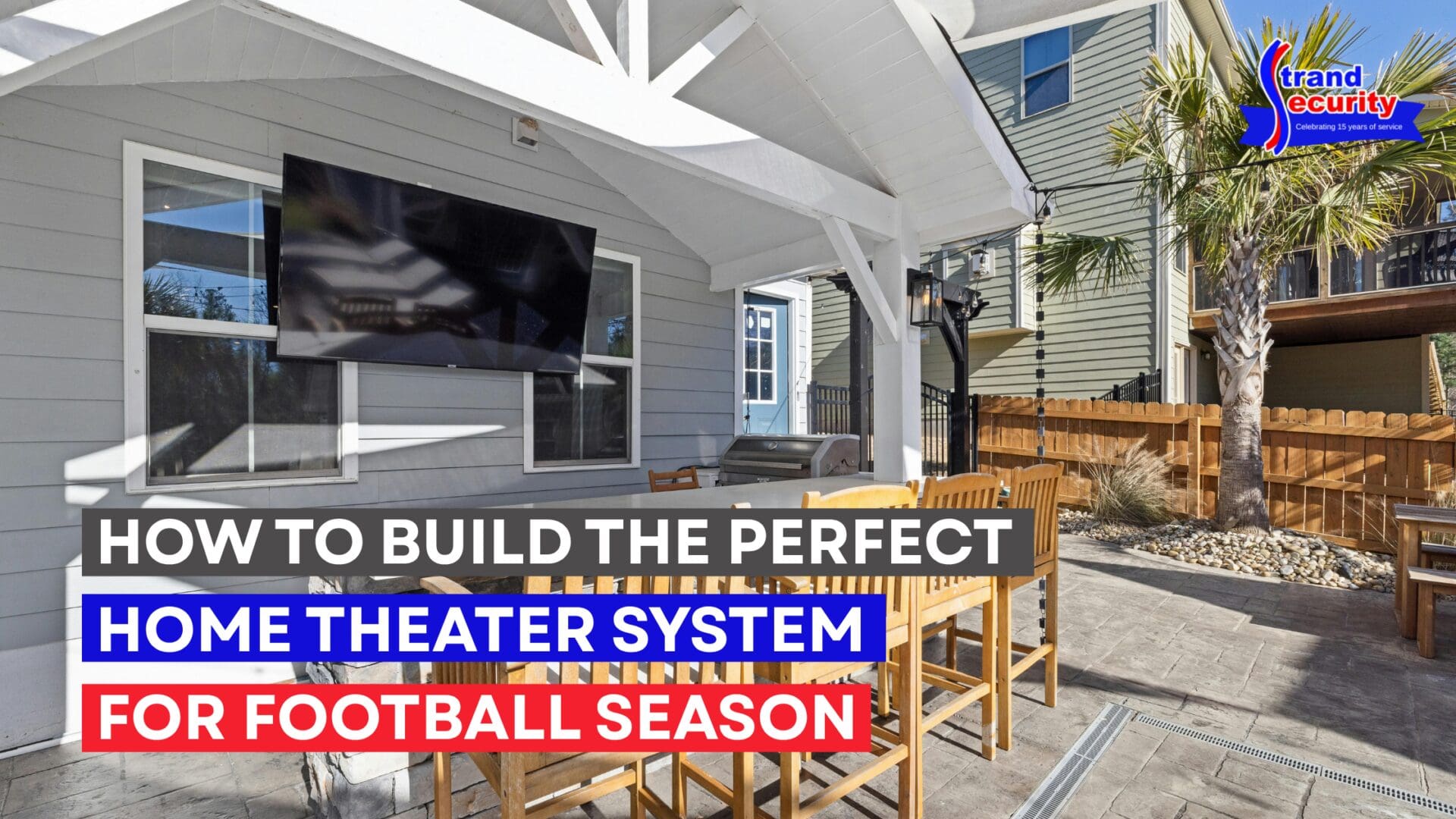
An outdoor-rated TV can turn your patio or covered porch into another entertainment zone. Add weather-appropriate outdoor audio, and guests can enjoy the game while someone tends the grill or the kids play in the yard.
The real advantage is flexibility.
You do not have to choose between watching the game inside or outside.
Imagine the main crowd gathering around the TV indoors. Then halftime arrives, everyone heads outside for food, and the game is still available on the patio. Someone can check the grill without missing a touchdown.
A connected indoor and outdoor entertainment system keeps the experience moving with your guests.
How Can Smart Home Automation Connect Indoor and Outdoor Entertainment?
Smart home automation can bring your home theater system, TVs, audio, lighting, and shades together into one connected experience.
Instead of searching for multiple remotes, adjusting lights manually, lowering shades, and switching between different apps, you can control compatible systems from one interface.
For example, a custom Game Day scene could:
- Turn on the main TV
- Start your preferred audio setup
- Lower smart shades to reduce glare
- Adjust interior lighting
- Turn on patio lighting as the sun goes down
- Activate outdoor entertainment zones
- Make it easier to control connected systems from one place
Connected TVs are increasingly becoming part of the broader smart home ecosystem. Parks Associates research notes that consumers show significant interest in using TVs for smart display and control functions, including controlling smart home devices.
The point is not to add technology just for the sake of adding technology.
It is to eliminate friction.
When guests arrive, you should be enjoying the party—not explaining which remote controls which device.
How Do Seating, Rugs, and Room Acoustics Affect Your Home Theater?
The equipment matters, but the room matters too.
Comfortable seating helps people settle in for a three-hour game. A thoughtful furniture layout gives more guests a good view of the screen. Rugs and other soft furnishings can also help reduce excessive echo and make the room feel warmer and more comfortable.
This is particularly important in rooms with hard flooring, large windows, or open layouts.
You do not necessarily need a dedicated theater room to create a great viewing experience. A living room, bonus room, basement, or multipurpose space can become an excellent entertainment area when the design considers both technology and how the room is used.
Why Does Professional Home Theater Installation Make a Difference?
Professional home theater installation helps bring all the pieces together.
A professionally designed system can help you avoid common problems such as:
- A TV mounted too high
- Visible or poorly managed wires
- Speakers placed in ineffective locations
- Audio that sounds great in one chair but poor everywhere else
- Screen glare at certain times of day
- Too many remotes
- Devices that do not work well together
- Indoor and outdoor systems that feel completely disconnected
Parks Associates has also highlighted the growing importance—and challenge—of integrating multiple connected devices into cohesive smart home ecosystems.
That is where professional design can make a real difference. Instead of building your entertainment system one device at a time and hoping everything works together, the entire system can be planned around your home, your lifestyle, and the way you entertain.
Create a Home Entertainment System Built for Every Season
Football season may be the excuse to upgrade your home theater system, but the right setup can deliver far more than a better place to watch the game.
Once the season is over, you can still enjoy your system for movie nights, March Madness, holiday gatherings, family game nights, backyard cookouts, and everyday entertainment.
At Strand Security, we help homeowners throughout Myrtle Beach, Horry County, Georgetown County, and the Grand Strand create connected home entertainment and smart home systems designed around the way they actually live.
Whether you want to upgrade one room, create a dedicated home theater, add outdoor TVs and audio, automate your lighting and shades, or connect your entire indoor and outdoor entertainment experience, the right design can make your home easier to enjoy all year long.
Because on game day, the last thing you should be worrying about is which remote turns on the TV.

Frequently Asked Questions About Home Theater Systems
What do I need for a home theater system?
A home theater system can include a TV or projector, speakers, audio equipment, streaming devices, lighting, and a control system. The right combination depends on your room, budget, and how you plan to use the space.
What size TV is best for a home theater?
The best TV size depends primarily on your viewing distance, room layout, and personal preference. A professional home theater consultation can help determine the right screen size and placement for your space.
Is surround sound better than a soundbar for watching football?
Surround sound can create a more immersive experience, especially in a dedicated entertainment room. However, a high-quality soundbar may be a better fit for some rooms and budgets.
Can I put a TV outside?
Yes, but outdoor entertainment areas should use equipment designed for outdoor conditions. An outdoor-rated TV is built differently from a standard indoor television and is generally the better choice for patios, porches, and other exposed environments.
Can indoor and outdoor TVs be connected through a smart home system?
Yes. Depending on the equipment and system design, smart home automation can help connect and control entertainment, audio, lighting, shades, and other compatible devices throughout indoor and outdoor spaces.
Can smart shades help with TV glare?
Yes. Motorized or smart shades can help reduce sunlight and screen glare, making it easier to watch TV during bright daytime hours.
Is professional home theater installation worth it?
Professional installation can help ensure your TV, speakers, wiring, lighting, and connected devices are properly planned and work together. It can also help avoid common problems with placement, clutter, glare, and complicated controls.
